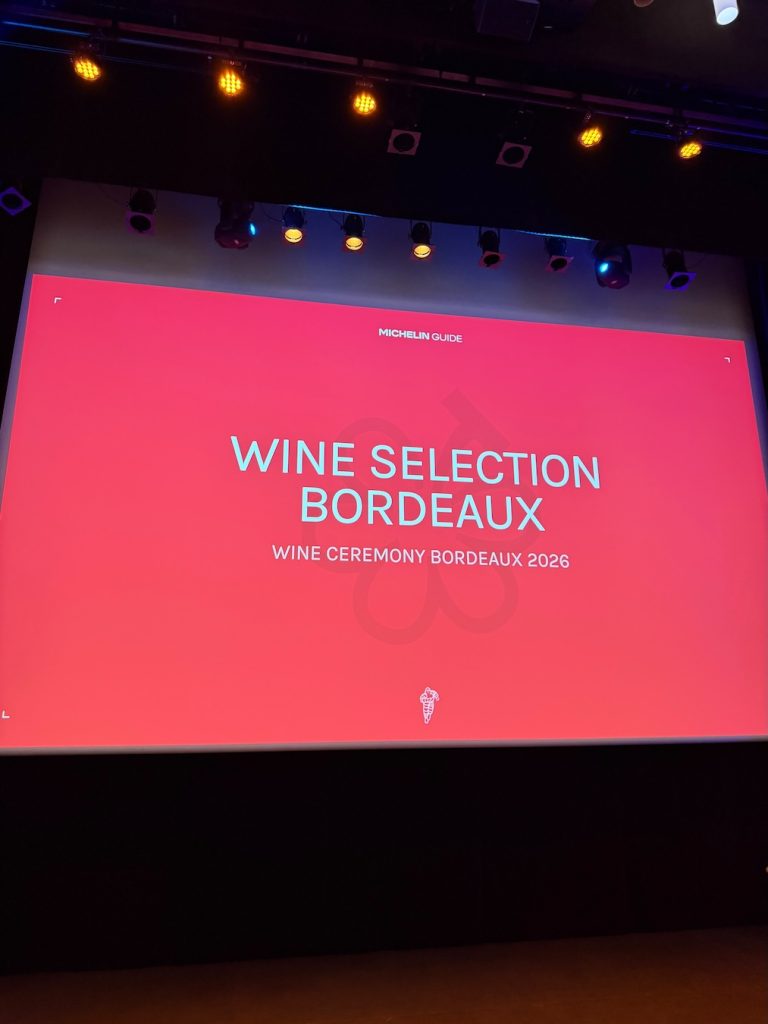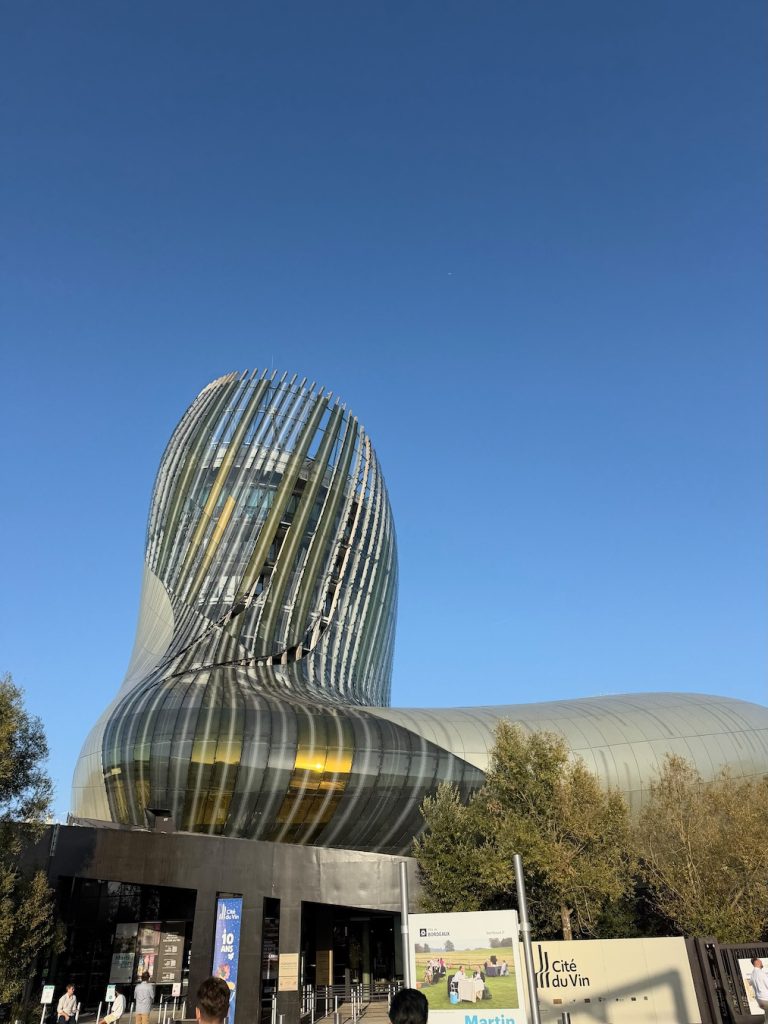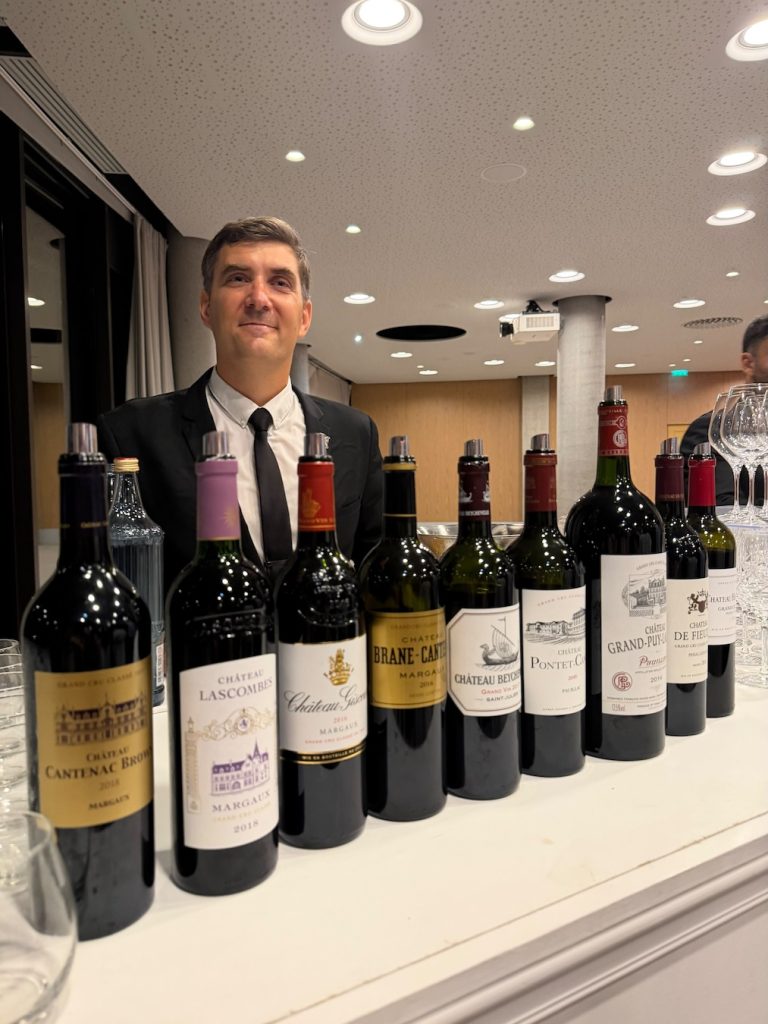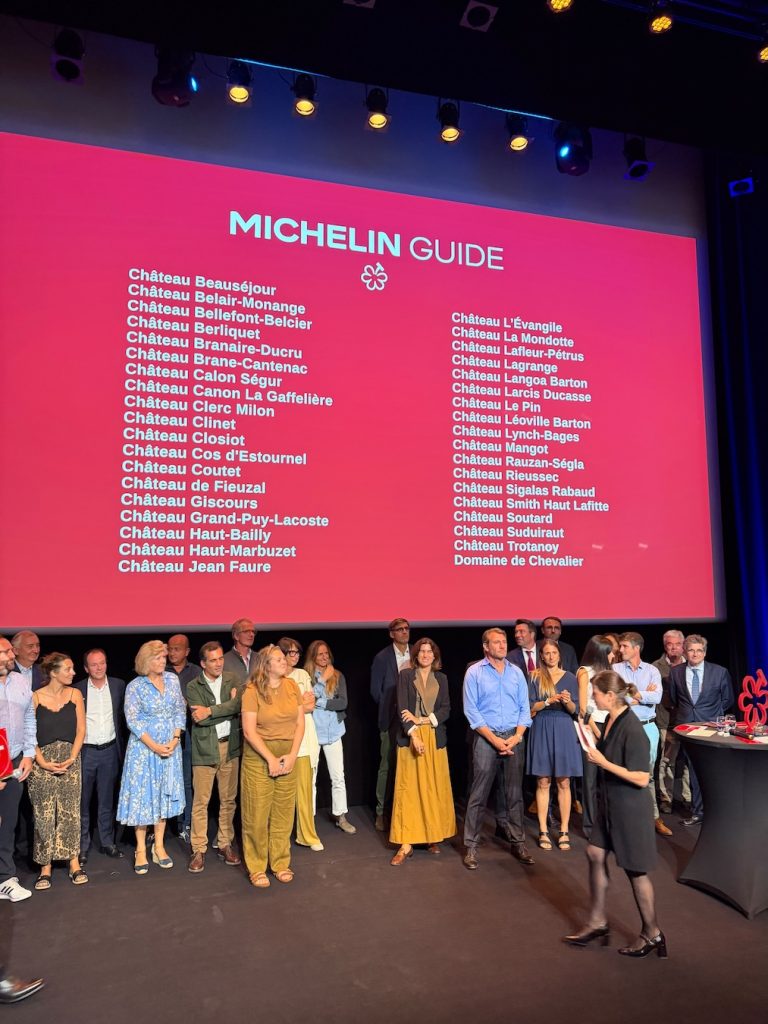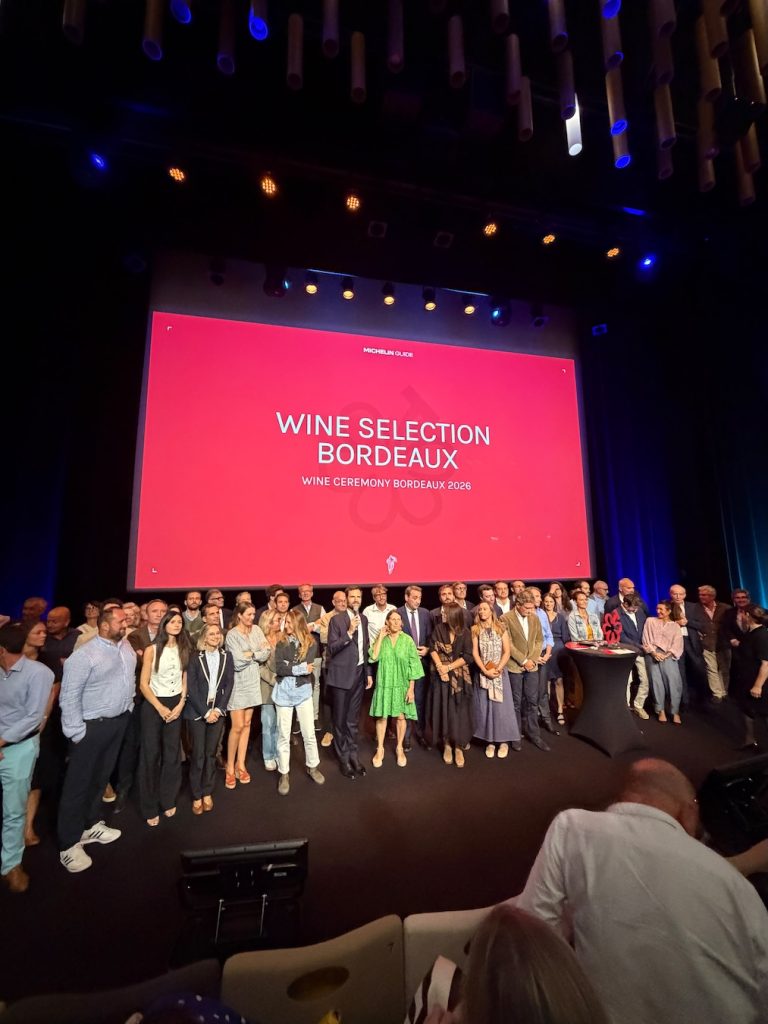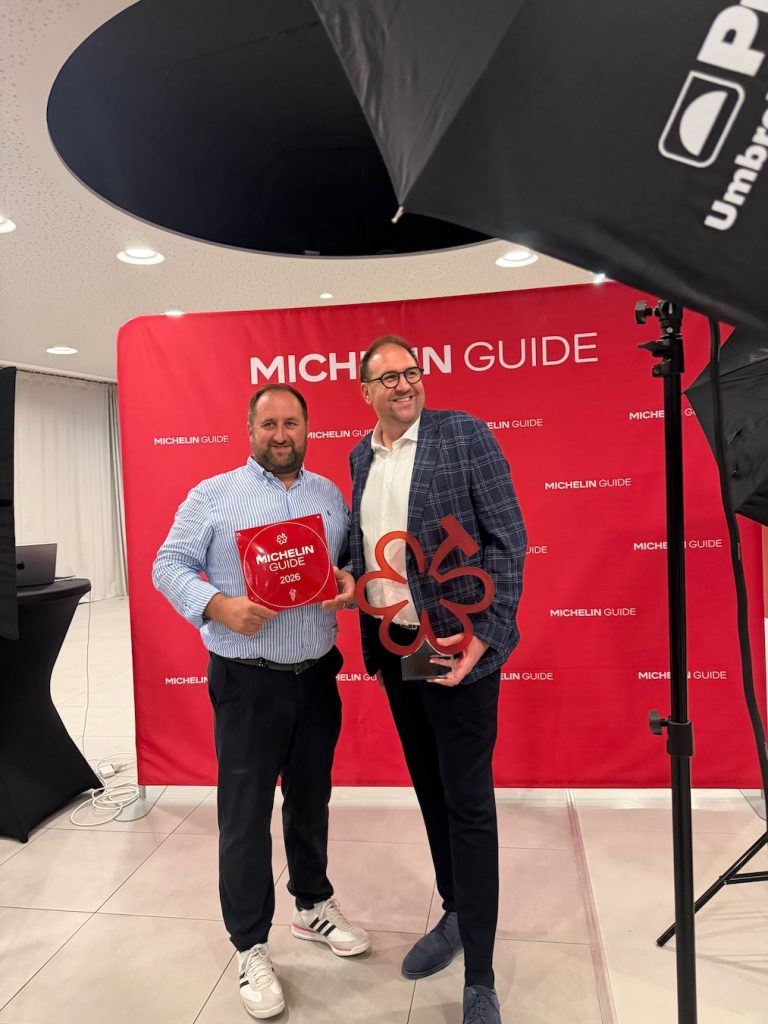

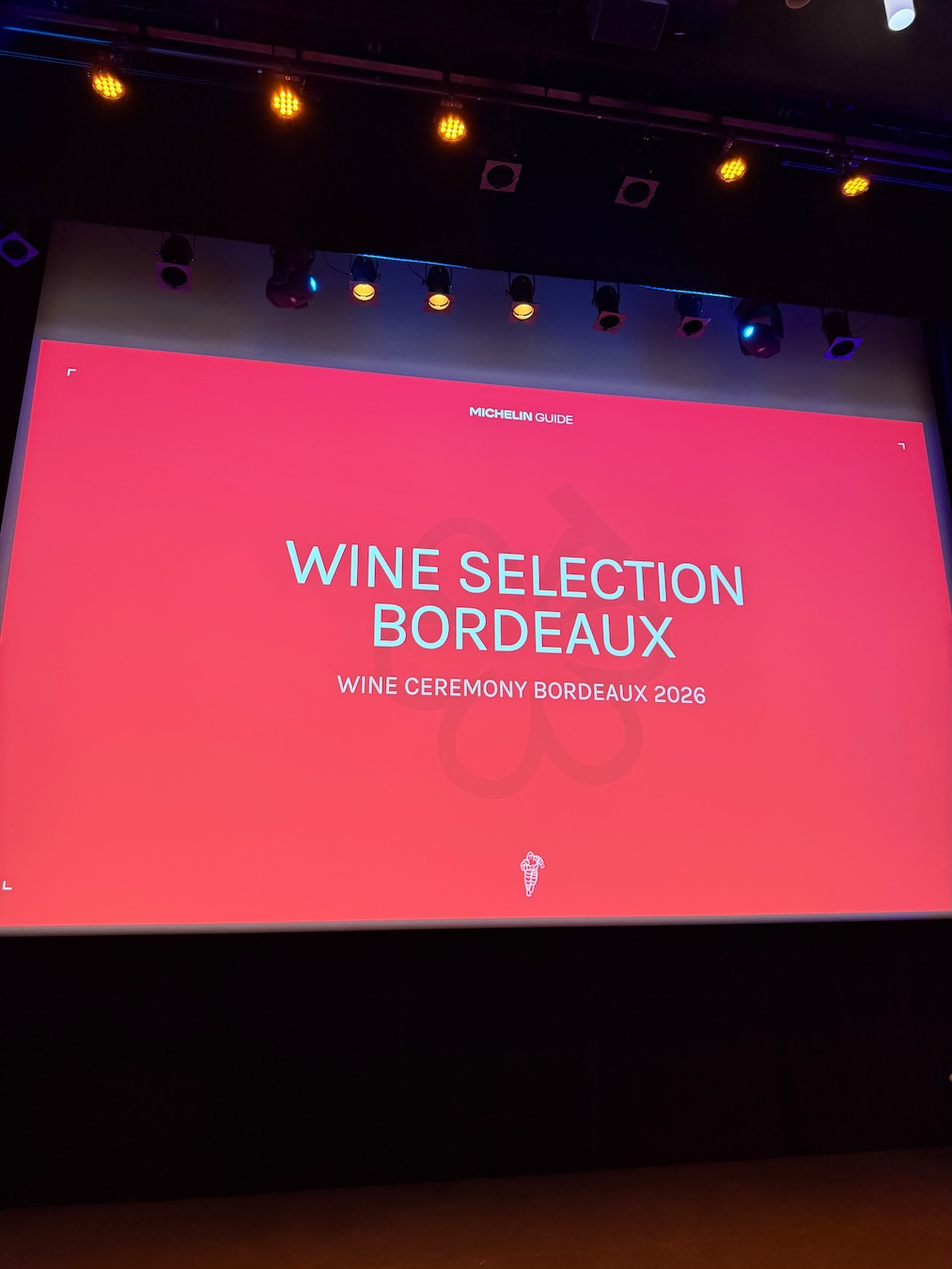
Monday 7 September 2026, La Cité du Vin, level 2 auditorium. On screen, the map of the Bordeaux vineyard coming to life with each announcement, and in the room a rather rare mix of women and men winegrowers, sommeliers, grand cru owners and journalists who came to experience the same thing live: the very first Bordeaux selection of the MICHELIN Grappes. Come with me as I read through this list of winners, from a taster's point of view, and above all from a practical one.
After Burgundy opened the way in the spring, the MICHELIN Guide chose Bordeaux to write the second chapter of its distinction dedicated to wine estates. 84 estates selected, five assessment criteria, three levels of Grappe. Here is what this grid changes for you, for me, and for how we read the vineyard in 2026.
The MICHELIN Grappes in Bordeaux, in brief
- Official announcement on 7 September 2026 at La Cité du Vin, the second chapter after Burgundy in the spring.
- The Grappes are not Michelin restaurant stars. They recognise wine estates according to their own grid, with a team of inspectors dedicated to wine.
- Three levels: 1 Grappe (high quality), 2 Grappes (excellence and consistency), 3 Grappes (exceptional, whatever the vintage).
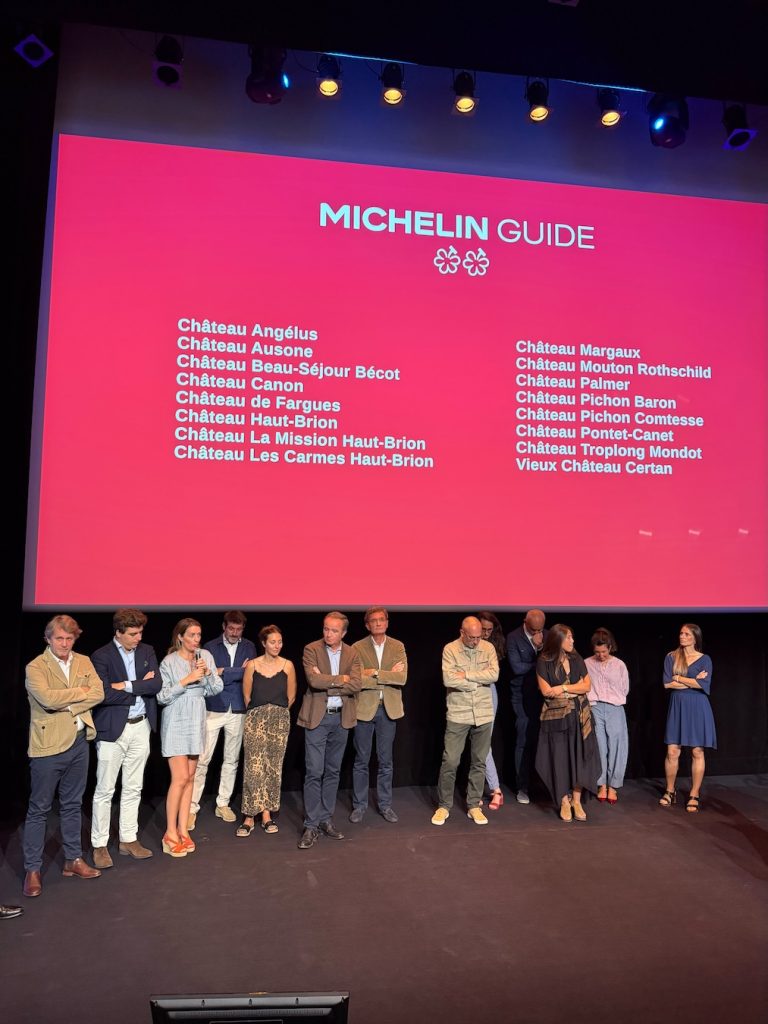
- 84 Bordeaux estates selected in total: 9 with 3 Grappes, 16 with 2 Grappes, 38 with 1 Grappe, 21 selected without a Grappe.
- Geographical scope: Médoc (Saint-Estèphe, Pauillac, Saint-Julien, Margaux), Pessac-Léognan, Saint-Émilion, Pomerol, Sauternes and Barsac.
1. MICHELIN Grappes, not wine stars: the nuance that changes everything
First point to make clearly, because the confusion has come up a lot in tasting conversations over the past few months. The MICHELIN Grappes are not stars. They are a distinction specific to wine estates, launched by the MICHELIN Guide to complete its reading of a destination.
After the restaurant where you eat and the hotel where you sleep, the Guide now looks at where you discover wine. The assessment relies on a dedicated team of inspectors, employees of the group, former sommeliers, specialist critics or wine professionals, with recommendations drawn up collectively. In other words: it is not starred restaurateurs rating winegrowers, it is palates trained in wine applying a grid to wine.
The three levels read as follows. 1 Grappe designates high-quality producers who make wines of character and style that are particularly successful in the best vintages. 2 Grappes recognise producers of excellence, with remarkable quality and consistency within their terroir. 3 Grappes designate exceptional producers whose wines inspire confidence whatever the vintage. Burgundy opened the dance, Bordeaux takes over.
2. 84 estates, and 9 châteaux crowned with 3 Grappes
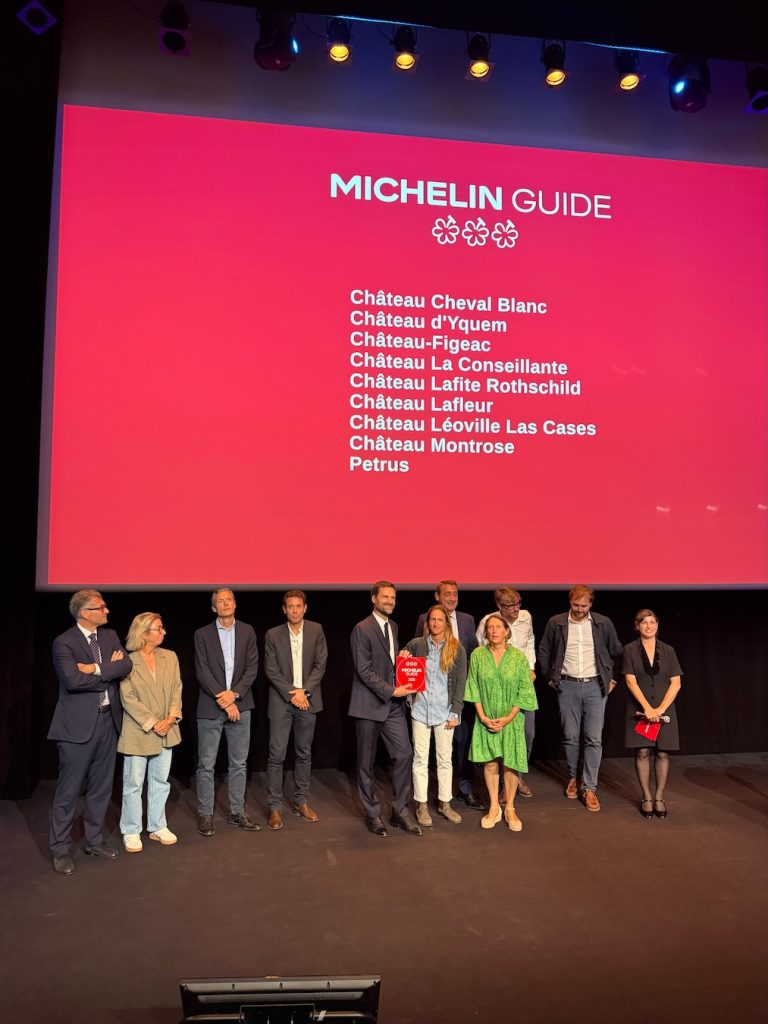
The inaugural Bordeaux selection brings together 84 estates. In the detail announced by Gwendal Poullennec, international director of the MICHELIN Guide, at 8:20 pm in the auditorium: 9 châteaux with 3 Grappes, 16 châteaux with 2 Grappes, 38 châteaux with 1 Grappe, and 21 châteaux simply selected, without a Grappe.
Here is the list of the 9 châteaux awarded 3 Grappes, the one I absolutely wanted to share with you first:
- Château Léoville Las Cases, Saint-Julien
- Château Lafite Rothschild, Pauillac
- Château Montrose, Saint-Estèphe
- Pétrus, Pomerol
- Château La Conseillante, Pomerol
- Château Lafleur, Vin de France, on the Pomerol plateau
- Château Cheval Blanc, Saint-Émilion
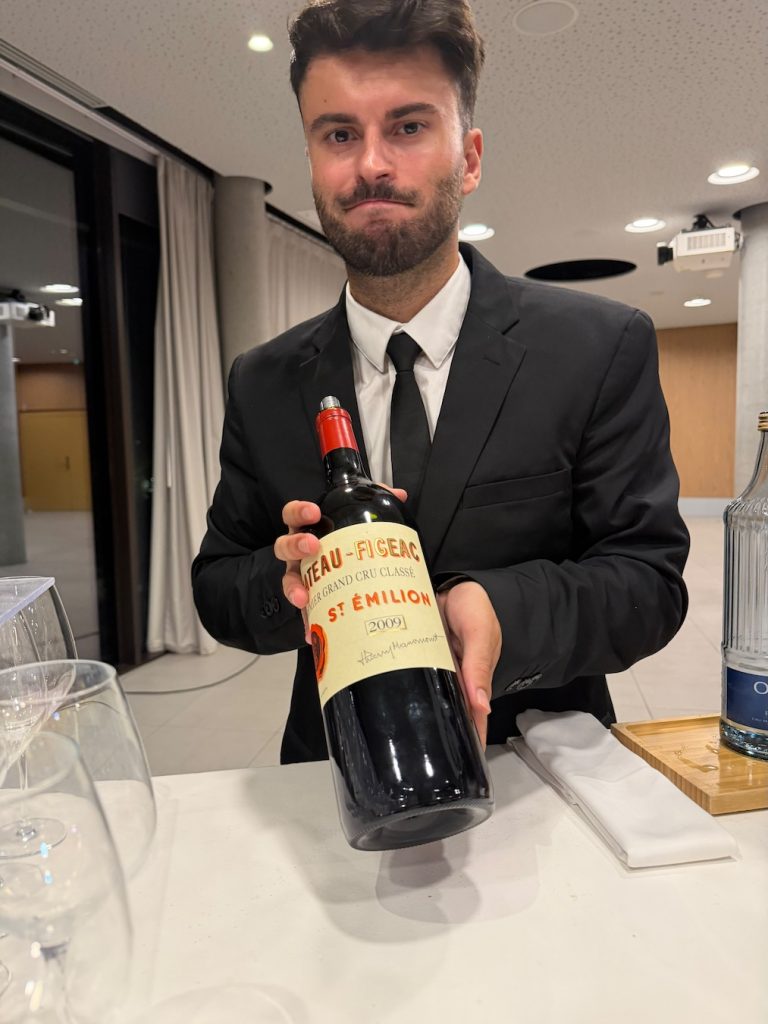
- Château-Figeac, Saint-Émilion
- Château d'Yquem, Sauternes
This list tells the whole story of Bordeaux through its grape varieties: the structuring cabernets of the left bank, the more sensual merlots and cabernets francs of the right bank, then the emblematic sweet wine of Sauternes with Yquem. As a Dame de la Jurade de Saint-Émilion, seeing Cheval Blanc and Figeac at the highest level does not surprise me for a second. Seeing Lafleur listed as Vin de France, and not Pomerol, says everything about the freedom of an estate that stands by its own style above administrative boxes.
What I take away above all: Michelin is not redoing a historic classification. It applies its own grid to a vineyard it has known for a long time, and it chooses to show a Bordeaux on the move, with its great names, but also new generations, new formats and new growing approaches. The full list of 84 estates can be found on the MICHELIN Guide website and app.
3. How the MICHELIN Guide awards a Grappe
The methodology is the same everywhere in the world, and that is what gives the distinction its consistency. The inspectors assess each estate on five criteria:
- The quality of the agronomy, in other words the work in the vineyard, the soils and the growing practices.
- Technical mastery, from the cellar to bottling.
- The identity of the estate, what the wine says about its place and its signature.
- The balance of the wines on tasting, whatever the style chosen.
- Consistency over time, across several vintages.
So a Grappe is not decided on one bottle tasted at a given moment. It is decided on the work in the vineyard, the signature of the cellar and regularity across vintages. For a sensory explorer trained at IPC and well versed in the WSET 2 method, this cross-reading speaks to me: it is exactly the framework used in professional tasting to avoid mistaking a favourite vintage for the true quality of an estate over time.
4. What I take away from this first Bordeaux edition, and how to use it
Three things, very concretely, if you are wondering how this new grid can help you on your journey as a wine lover.
A complementary compass, not a replacement for 1855
The 1855 classification remains what it is: a fixed commercial monument, with its strengths and its blind spots. The MICHELIN Grappes do not crush it. They add a second key to reading the vineyard, more alive, revisable over time, and above all open to properties that do not appear in the major traditional classifications. For anyone who wants to step off the beaten track while keeping a reliable reference point, it is genuinely good news.
A wine tourism travel tool
Michelin builds its Grappes on the same logic as its restaurant stars and hotel keys: giving travellers a reliable reference point to plan a destination. Combining a selected hotel with a starred restaurant and an estate with Grappes means building a coherent Bordeaux weekend, from grape to plate. That is how I now advise my readers to use this new grid in practice.
A signal for the new generation
What I particularly appreciated in Gwendal Poullennec's speech: the attention paid to new generations and new growing approaches, including among the 21 estates simply selected without a Grappe. That is often where the properties to watch closely slip in. Personally, that is where I will go looking for my next favourites.
Practical information
- Official announcement: Monday 7 September 2026 at La Cité du Vin.
- Address: 134 quai de Bacalan, 33000 Bordeaux.
- Full selection: guide.michelin.com and the MICHELIN Guide mobile app.
Source for the event coverage: Bordeaux Confidentiel, MICHELIN Grappes in Bordeaux.
My take, in a few words
Bordeaux holds a special place in the story of French wine, and the MICHELIN Grappes add an extra key for anyone trying to find their way around the vineyard without relying only on historic classifications. It is useful, it is clean, it is revisable. And it is The Trend of autumn 2026 for anyone who loves wine differently.
➡️ So, which château in the selection will you discover first? Tell me in the comments or on Instagram which of the 9 châteaux with 3 Grappes makes you dream the most.
Estelle, C'est Madame qui choisit le Vin
EXCESSIVE DRINKING IS DANGEROUS FOR YOUR HEALTH. PLEASE DRINK RESPONSIBLY.